
How Long Should You Run an Air Purifier After Construction or Renovation?

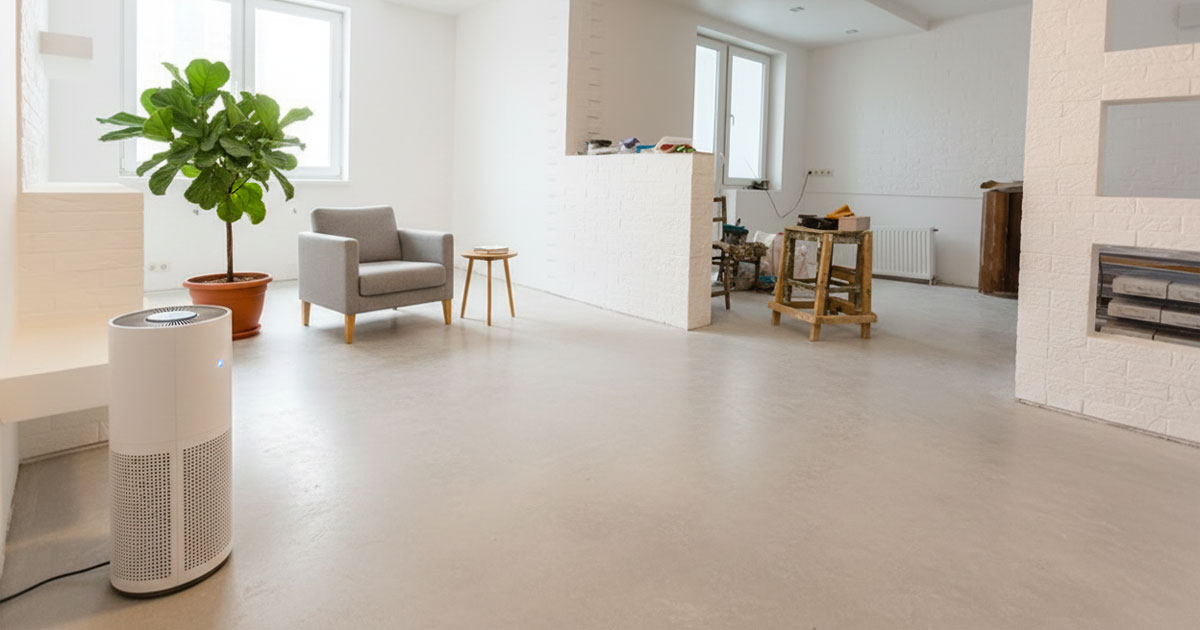
Air purifier running in a newly renovated home after construction to help improve indoor air quality and reduce airborne dust

Does an Air Purifier Really Help After Construction or Renovation?

If you’ve recently finished a remodeling project, one of the first questions you may have is how long should you run an air purifier after construction. Even after the contractors leave, fine dust and airborne particles can remain in your home for days or even weeks, especially after larger renovations.
An air purifier can be an effective tool for improving indoor air quality by capturing many of the particles that become airborne during construction. However, knowing how long should I run an air purifier depends on the size of the project, the amount of dust created, and whether the space has been thoroughly cleaned afterward.
In this guide, we’ll explain how long should an air purifier run after different types of construction and renovation projects, how often to use one, what air purifiers can and cannot remove, and why professional post-construction cleaning can make an even bigger difference once the dust begins to settle.”

Why Construction Dust Stays in the Air Longer Than You Think

Many homeowners are surprised to find that their home still feels dusty days or even weeks after a renovation is complete. That’s because construction dust isn’t made up of large particles that simply fall to the floor. It often contains microscopic particles from drywall, wood, concrete, insulation, and other building materials that can stay suspended in the air for extended periods before eventually settling on surfaces.
Child standing near an air purifier in a home after renovation to help reduce airborne construction dust and improve indoor air quality
Even after the visible dust has been cleaned up, everyday activities like walking through a room, opening doors, running the HVAC system, or turning on ceiling fans can send those fine particles back into the air. This cycle of settling and becoming airborne again is one of the main reasons people continue to wonder how long should I run my air purifier after construction.
An air purifier equipped with a true HEPA filter can help capture many of these airborne particles as they circulate through the room. However, an air purifier only cleans the air that passes through it. Dust that has settled inside cabinets, on walls, window sills, light fixtures, HVAC vents, or other surfaces will remain there until it is physically removed through detailed cleaning.
If you’re wiping up dust every few days and it keeps returning, you’re not imagining it. Fine construction dust settles, gets stirred back into the air, and settles again until you completely remove it. That’s why pairing a post-construction cleaning with continued air filtration is the best way to reduce lingering dust and create a healthier indoor environment.

How Long to Run an Air Purifier After Different Types of Projects

The answer depends on the size of the project, how much dust was created, and whether the space has already received a thorough cleaning. While every home is different, these general recommendations can help you decide how long to leave an air purifier on after construction or renovation.

Small repairs or painting

Run continuously for 24 to 72 hours after the area has been cleaned. If you’re wondering how long to keep air purifier on, this is usually enough for projects with minimal dust.

Kitchen or bathroom renovation

Plan to run the purifier for several days after the final cleanup. Continue longer if you still notice dust settling on surfaces.

Whole-home renovation

How long do you run an air purifier for larger renovations? Many homeowners keep it running for 1 to 2 weeks after professional post-construction cleaning.

Lead-safe renovation or abatement work

After proper lead dust cleaning has been completed, continue using the purifier for several additional days to help capture any remaining airborne particles.

Mold remediation or water damage restoration

Continue running the purifier for several days to a few weeks, depending on the project‘s size and your remediation contractor’s recommendations.
Air purifiers work best after dust has already been removed from surfaces. If drywall dust is still covering floors, cabinets, vents, or light fixtures, those particles will continue becoming airborne every time someone walks through the space or the HVAC system turns on.

Construction dust doesn't always disappear when the work is finished.

Post Green Cleaning provides professional post-construction and post-remediation cleaning services that remove fine dust from surfaces throughout your home or building, helping create a cleaner environment before you rely on air purification alone.

Do Air Purifiers Actually Remove Construction Dust?

The short answer is yes, but only the dust that’s still floating in the air.
A quality air purifier with a true HEPA filter can capture many of the fine airborne particles created during construction and renovation, including drywall dust, wood dust, pollen, and other common particulates. This is one of the reasons how long to run air purifier depends on the conditions inside your home. If construction dust is still circulating, regular use can help improve indoor air quality.
What an air purifier cannot do is remove dust that has already settled throughout the home. Dust hiding on shelves, inside cabinets, on window sills, behind furniture, or inside HVAC vents won’t disappear simply by running an air purifier. Those surfaces need to be cleaned before the remaining airborne particles can be effectively filtered. A good way to think about it is this: An air purifier helps clean the air while professional cleaning removes the dust that’s already settled. Using both together is often the most effective way to reduce lingering construction dust after a renovation.

Air Purifiers Can Help With

Air Purifiers Cannot Remove

Illustration showing clean airflow in a home to represent how an air purifier filters airborne particles after construction or renovation

Air Purifiers Work Best After Professional Post-Construction Cleaning

Running an air purifier is an excellent way to improve indoor air quality after construction or renovation, but it works best when the dust has already been removed from the space. If surfaces throughout the home are still coated with fine construction dust, those particles can continue becoming airborne every time someone walks through a room, opens a door, or turns on the HVAC system.
Professional post-construction cleaning focuses on removing the dust that an air purifier can’t reach. Using HEPA vacuums, detailed hand cleaning, and damp wiping techniques, cleaners remove dust from floors, walls, trim, cabinets, window sills, light fixtures, vents, and other hard-to-reach surfaces before it has the chance to circulate again.
Many homeowners ask how often should I run my air purifier after the cleaning is finished. While every project is different, running your air purifier for several days afterward can help capture any remaining airborne particles as you work on returning your home to normal.
Whether you’ve completed a kitchen remodel, a whole-home renovation, or post-remediation work, combining a deep cleaning with continued air filtration is the most effective way to create a cleaner, healthier indoor environment.

Signs You Should Keep Running Your Air Purifier

Wondering how long to keep your air purifier on after construction? Instead of watching the calendar, pay attention to how your home feels. If you notice any of the signs below, it’s a good idea to continue running your air purifier while addressing the source of the remaining dust.

Continue Running Your Air Purifier If:

Homeowner wiping dust from kitchen shelves after construction to remove settled dust before relying on an air purifier

You still notice a layer of dust on surfaces each day.

Fine construction dust can continue settling long after a renovation is finished, especially if it wasn’t completely removed during the initial cleanup.

Your HVAC system was recently turned back on.

Air moving through your heating and cooling system can stir up dust that settled inside vents or around registers during construction.

You or your family are experiencing allergy-like symptoms.

Sneezing, irritated eyes, or coughing may be signs that fine airborne particles are still circulating throughout the home.

The renovation involved drywall sanding, demolition, or concrete work.

These types of projects often produce large amounts of fine dust that can remain airborne longer than homeowners expect.

You're still asking yourself, "How long should your air purifier run?"

If dust continues to appear or the air doesn’t feel noticeably cleaner, keep the purifier running while making sure any remaining dust is removed from surfaces throughout the home.
An air purifier can only capture particles that pass through the filter. If dust keeps returning even after several days of continuous use, the issue may be settled dust rather than airborne dust. A thorough post-construction cleaning can remove those hidden particles, allowing your air purifier to work more effectively.

Construction dust settles everywhere, not just in the air.

Post Green Cleaning specializes in detailed post-construction cleaning that removes fine dust from surfaces before your family or employees move back into the space.

Creating a Healthier Home After Construction

An air purifier is a valuable part of improving indoor air quality after construction or renovation, but it’s only one piece of the puzzle. Running an air purifier can help reduce airborne dust, yet the best results come from combining air filtration with a thorough cleaning that removes dust from the surfaces where it settles.
If you’re wondering how long should i run air purifier or how long should you run an air purifier after construction, the answer depends on your home, the amount of dust remaining after the project, and whether the space has been thoroughly cleaned.
Clean, renovated home after post-construction cleaning with improved indoor air quality and a dust-free living space
Before moving furniture back into place or settling into your newly renovated space, take a final walk through the home. Check window sills, baseboards, cabinets, light fixtures, vents, and other areas where fine dust often collects. These overlooked spots can continue releasing dust into the air long after the renovation is complete.
By pairing detailed post-construction cleaning with continued air filtration, you’ll enjoy a cleaner home, better indoor air quality, and peace of mind knowing the dust left behind by construction has been properly addressed.

Frequently Asked Questions

How long does it take an air purifier to work?
Most air purifiers begin improving indoor air quality as soon as they’re turned on, but noticeable results depend on the room size, the purifier’s airflow, and the amount of dust present. Following construction or renovation, it may take several hours or even a few days of continuous operation to significantly reduce airborne particles.

Remember when figuring out how long should you run air purifier, that an air purifier only filters the air that passes through it. If dust has already settled on surfaces throughout the home. Professional cleaning is still needed to remove those particles before they become airborne again.

You should begin using an air purifier as soon as construction or renovation work is complete, especially after the initial cleanup. Running it on the following days helps capture fine dust that remains suspended in the air or is stirred up as people move through the space.

For the best results, combine air purification with a thorough post-construction cleaning. Removing settled dust from surfaces first allows your air purifier to focus on capturing the particles still circulating throughout the room.

Yes, air purifiers can help reduce airborne construction dust, particularly when they use a true HEPA filter. They are effective at capturing many of the fine particles created during drywall sanding, woodworking, painting, and other renovation activities.

However, an air purifier cannot remove dust that has already settled on floors, furniture, walls, cabinets, or HVAC vents. That’s why professional cleaning and air filtration work best when used together after construction is complete.

Many homeowners ask how long should air purifier run after a renovation. In most cases, running it continuously for the first few days provides the greatest benefit, especially after larger remodeling projects.

Once airborne dust levels decrease, you can adjust the runtime based on your home’s air quality, the amount of remaining dust, and your family’s comfort. If dust continues settling on surfaces each day, it’s usually a sign that additional cleaning may be needed.

If you’re wondering how often to run air purifier after construction, most homeowners benefit from running it continuously for the first several days after the project is complete. After that, you can reduce the runtime as dust levels improve and fewer airborne particles are present.

If you’re also wondering how long to leave air purifier on, watch for signs like dust settling on surfaces, allergy symptoms, or particles circulating when the HVAC system runs. Those are good indicators that it should continue running while any remaining dust is removed from the home.

Running an air purifier continuously for the first several days after construction or renovation is often recommended because fine dust can continue circulating long after the work is finished. The exact amount of time depends on the size of the project and how thoroughly the space has been cleaned.

If you’re still seeing dust accumulate throughout your home after several days, the issue is often settled construction dust rather than airborne particles. Removing that dust from surfaces will allow your air purifier to work more effectively.

No. An air purifier is designed to filter airborne particles, but it cannot remove the dust and debris that settle on surfaces throughout a home after construction or renovation. Cabinets, baseboards, window sills, light fixtures, vents, and other areas should be thoroughly cleaned before relying on an air purifier alone.

Professional post-construction cleaning removes the dust that air purifiers can’t reach, while continued air filtration helps improve indoor air quality afterward. Together, they provide a more complete solution than either one alone.

Finished renovating but still finding dust days later?

Post Green Cleaning provides professional post-construction and post-remediation cleaning services that remove the fine dust left behind, helping prepare your home or building for a cleaner, healthier space.