
Does an Air Purifier Really Help After Construction or Renovation?
Why Construction Dust Stays in the Air Longer Than You Think

How Long to Run an Air Purifier After Different Types of Projects
Small repairs or painting
Kitchen or bathroom renovation
Whole-home renovation
Lead-safe renovation or abatement work
Mold remediation or water damage restoration
Construction dust doesn't always disappear when the work is finished.
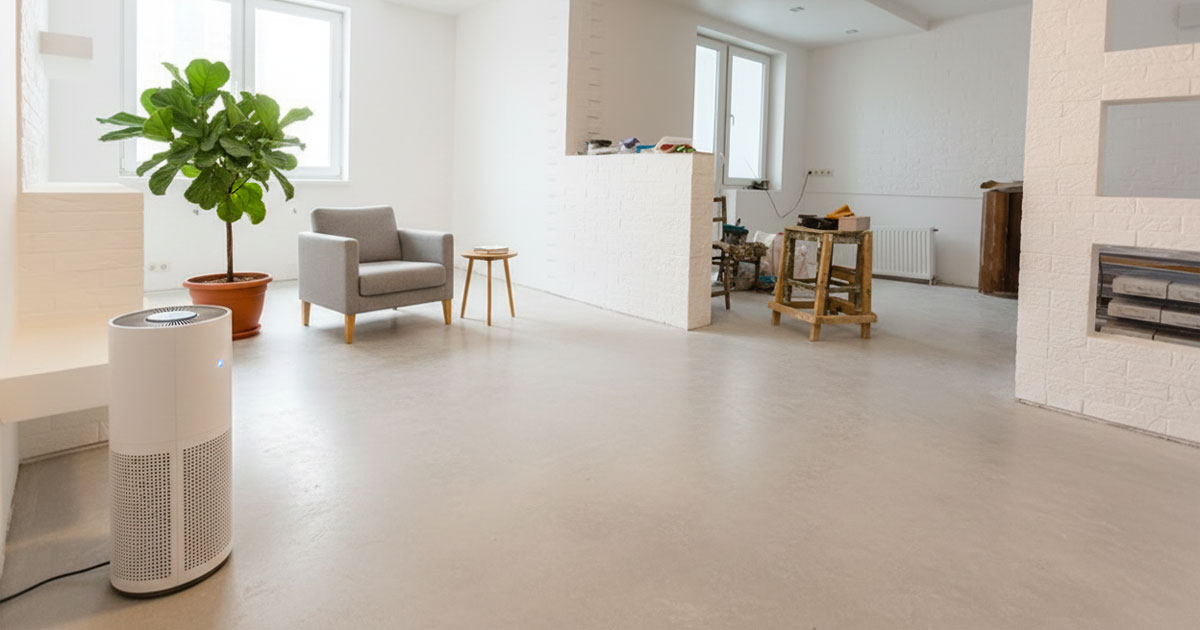
Do Air Purifiers Actually Remove Construction Dust?
Air Purifiers Can Help With
- Airborne drywall dust
- Fine wood dust
- Airborne insulation fibers
- Pollen and other airborne particles
- Some lingering odors when paired with the proper filters
Air Purifiers Cannot Remove
- Clean inside cabinets and drawers
- Dust inside cabinets and drawers
- Wall and baseboard dust
- Dust trapped in vents and ductwork
- Construction debris and any leftover materials

Air Purifiers Work Best After Professional Post-Construction Cleaning
Signs You Should Keep Running Your Air Purifier
Continue Running Your Air Purifier If:

You still notice a layer of dust on surfaces each day.
Your HVAC system was recently turned back on.
You or your family are experiencing allergy-like symptoms.
The renovation involved drywall sanding, demolition, or concrete work.
You're still asking yourself, "How long should your air purifier run?"
Construction dust settles everywhere, not just in the air.
Creating a Healthier Home After Construction

Frequently Asked Questions
How long does it take an air purifier to work?
Remember when figuring out how long should you run air purifier, that an air purifier only filters the air that passes through it. If dust has already settled on surfaces throughout the home. Professional cleaning is still needed to remove those particles before they become airborne again.
When should you use an air purifier after construction or renovation?
For the best results, combine air purification with a thorough post-construction cleaning. Removing settled dust from surfaces first allows your air purifier to focus on capturing the particles still circulating throughout the room.
Do air purifiers actually cut down on construction dust?
However, an air purifier cannot remove dust that has already settled on floors, furniture, walls, cabinets, or HVAC vents. That’s why professional cleaning and air filtration work best when used together after construction is complete.
How many hours a day should you run an air purifier after a renovation?
Once airborne dust levels decrease, you can adjust the runtime based on your home’s air quality, the amount of remaining dust, and your family’s comfort. If dust continues settling on surfaces each day, it’s usually a sign that additional cleaning may be needed.
How often should you run an air purifier after construction?
If you’re also wondering how long to leave air purifier on, watch for signs like dust settling on surfaces, allergy symptoms, or particles circulating when the HVAC system runs. Those are good indicators that it should continue running while any remaining dust is removed from the home.
Should you run an air purifier continuously after a project until dust settles?
If you’re still seeing dust accumulate throughout your home after several days, the issue is often settled construction dust rather than airborne particles. Removing that dust from surfaces will allow your air purifier to work more effectively.
Can you use an air purifier instead of post-construction cleaning?
Professional post-construction cleaning removes the dust that air purifiers can’t reach, while continued air filtration helps improve indoor air quality afterward. Together, they provide a more complete solution than either one alone.